
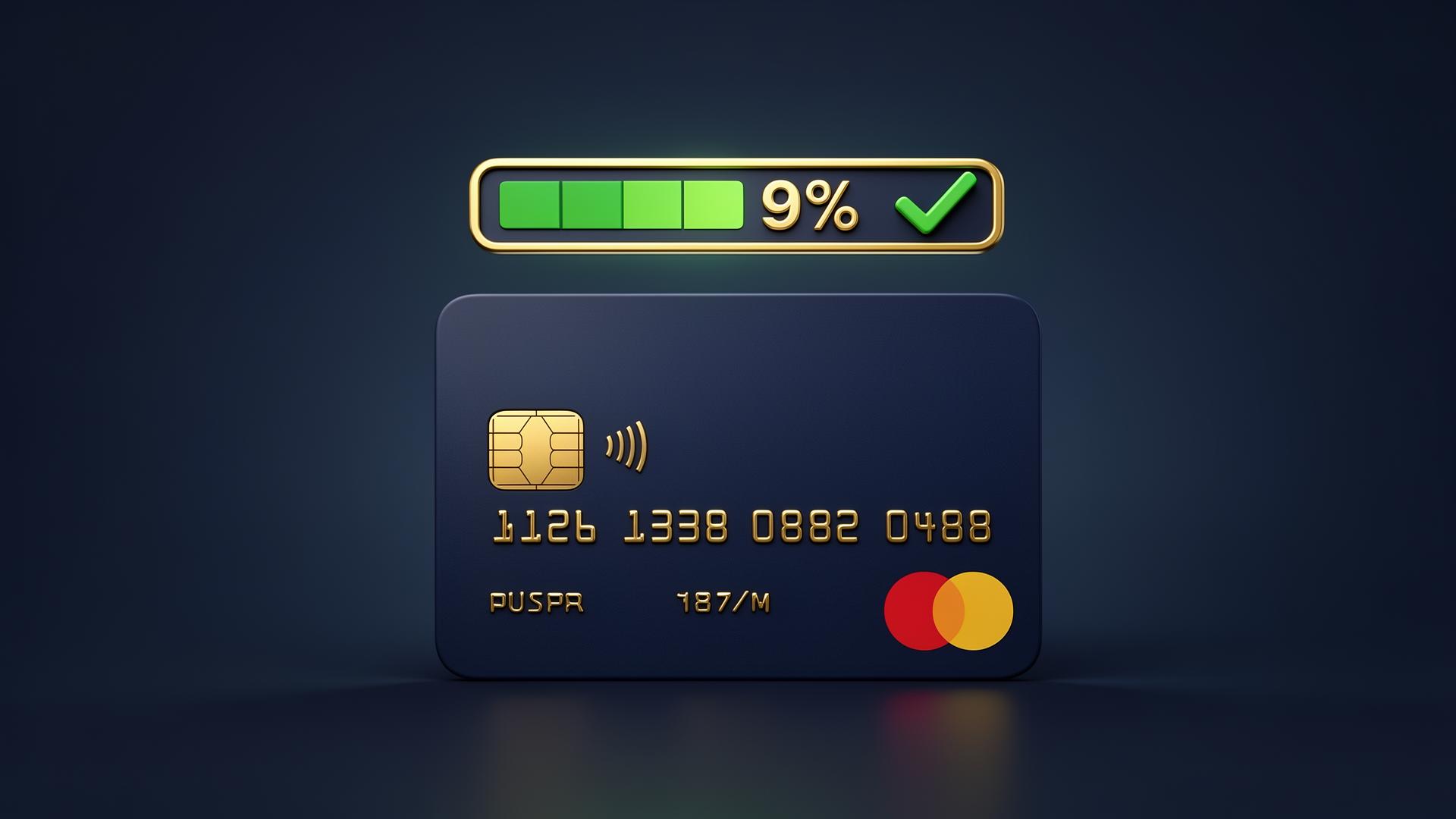
Credit Card Utilization Explained — The 9% Rule That Lifts Your Score Fast
Utilization is the second-largest scoring factor — and the only one you can move in a single billing cycle. Here's exactly how it's calculated, where the bands matter, and the timing trick that costs nothing and moves the most points.
Important Legal Notice
The information on this site is for informational and educational purposes only. It does not constitute legal, financial, credit, or professional advice. Comparisons, pricing, and recommendations are subject to change without notice. Verify current terms directly with the provider before making decisions. Credit results vary by individual. Consult a qualified advisor for personalized guidance. We assume no liability for decisions made based on this content.
How credit card utilization is calculated
Per the CFPB's scoring breakdown, both FICO and VantageScore measure utilization in two ways simultaneously:
- Overall utilization = total reported balances ÷ total credit limits across every revolving account.
- Per-card utilization = each card's reported balance ÷ its own limit. One maxed-out card hurts even when your overall is low.
If you have a $5,000 limit and report a $1,000 balance, your utilization is 20% on that card. Add a second card with $2,000 limit and $200 balance and your overall utilization is $1,200 ÷ $7,000 = 17%.
The utilization tiers — what each band costs
| Reported utilization | Score impact (vs. 9%) | Tier |
|---|---|---|
| 0% all cards | Slightly lower | No-use penalty |
| 1–9% | Optimal — peak score | Sweet spot |
| 10–29% | −10 to −20 points | Acceptable |
| 30–49% | −20 to −40 points | Caution band |
| 50–89% | −40 to −80 points | Risk band |
| 90–100% | −80 to −120 points | Distress band |
The statement-date timing trick (worth 30 points instantly)
Card issuers report your balance to the bureaus on your statement closing date, not your due date. If you charge $2,000 and pay it off after the statement cuts, the $2,000 still hits your credit report for the next 30 days. Two options:
- Pay before the statement closes. Check your statement (or your card's app) for the closing date — it's usually the same day every month. Pay the balance down to under 9% of limit before that date.
- Pay twice a month. A mid-cycle payment + an end-of-cycle payment keeps your reported number low without micromanaging dates.
Watch utilization changes land on your score in real time
$1 for 15 days — then choose monthly, quarterly, or yearly. Cancel anytime.
- 3-Bureau credit reports & scores
- Daily monitoring & alerts
- Identity theft protection
- Score simulator & insights
- $1 for 15 days trial
- Cancel online anytime
- 3-Bureau credit reports & scores
- Daily monitoring & alerts
- Identity theft protection
- Score simulator & insights
- $1 for 15 days trial
- Cancel online anytime
- 3-Bureau credit reports & scores
- Daily monitoring & alerts
- Identity theft protection
- Score simulator & insights
- $1 for 15 days trial
- Cancel online anytime
Per-card vs overall — which matters more?
FICO and VantageScore both weight overall utilization more heavily, but per-card utilization is a tiebreaker. One card at 95% utilization with five others at 0% can cost more points than spreading the same balance across all six at 16% each. Pay highest-utilization card first for score lift, even if it isn't the highest APR.
4 fastest moves to drop reported utilization
- Pay your statement-date balance under 9% — single biggest lever.
- Request a soft-pull credit-limit increase every 6 months. Doubling your limit halves your utilization without changing spending.
- Spread balances across cards — keep every card under 30%, no card over 50%.
- Become an authorized user on a low-utilization card — the limit and history inherit to your file.
What NOT to do
- Close an old card "to clean up". You lose the entire limit overnight; every remaining card's utilization spikes. Net 10–30 point drop.
- Open 3 new cards just to lower utilization. Hard inquiries + new-account-age drop typically cancel the utilization gain for 6+ months.
- Carry a balance to "show activity". Pure myth. Pay in full; the score reports identically.
- Cycle balances mid-month, expecting bureaus to see the low number. Bureaus only see the statement-date snapshot.
Related guides
- How to improve your credit score →
- What hurts your credit score most →
- 5 moves to lift your SSN score in 60 days →
- FICO score explained →
Credit cards and tools to manage utilization
Personal Loan Offers
See loan options from trusted partners based on your credit profile.
Credit Builder Cards
Designed to help establish or improve your credit history.
Credit Card Offers
Explore cards that match your credit standing and goals.
Get an ITIN Number
Learn how to apply for or renew your ITIN today.
Bank Account Options
Access checking and savings accounts from reputable institutions.
Simply Approved Mortgages
ITIN-friendly home financing from Simply Approved Mortgages, a Simply Approved Corporation brand.
Frequently asked questions about credit card utilization
Start your credit monitoring today
$1 for 15 days — cancel anytime.