How to Build Credit From Scratch — A 5-Step 12-Month Plan
Whether you're new to the U.S., just turned 18, or rebuilding after a setback, here's the fastest legal path to a usable U.S. credit score — with month-by-month milestones, recommended account types, and the utilization math that actually moves the needle.
Important Legal Notice
The information on this site is for informational and educational purposes only. It does not constitute legal, financial, credit, or professional advice. Comparisons, pricing, and recommendations are subject to change without notice. Verify current terms directly with the provider before making decisions. Credit results vary by individual. Consult a qualified advisor for personalized guidance. We assume no liability for decisions made based on this content.
What "building credit" actually means
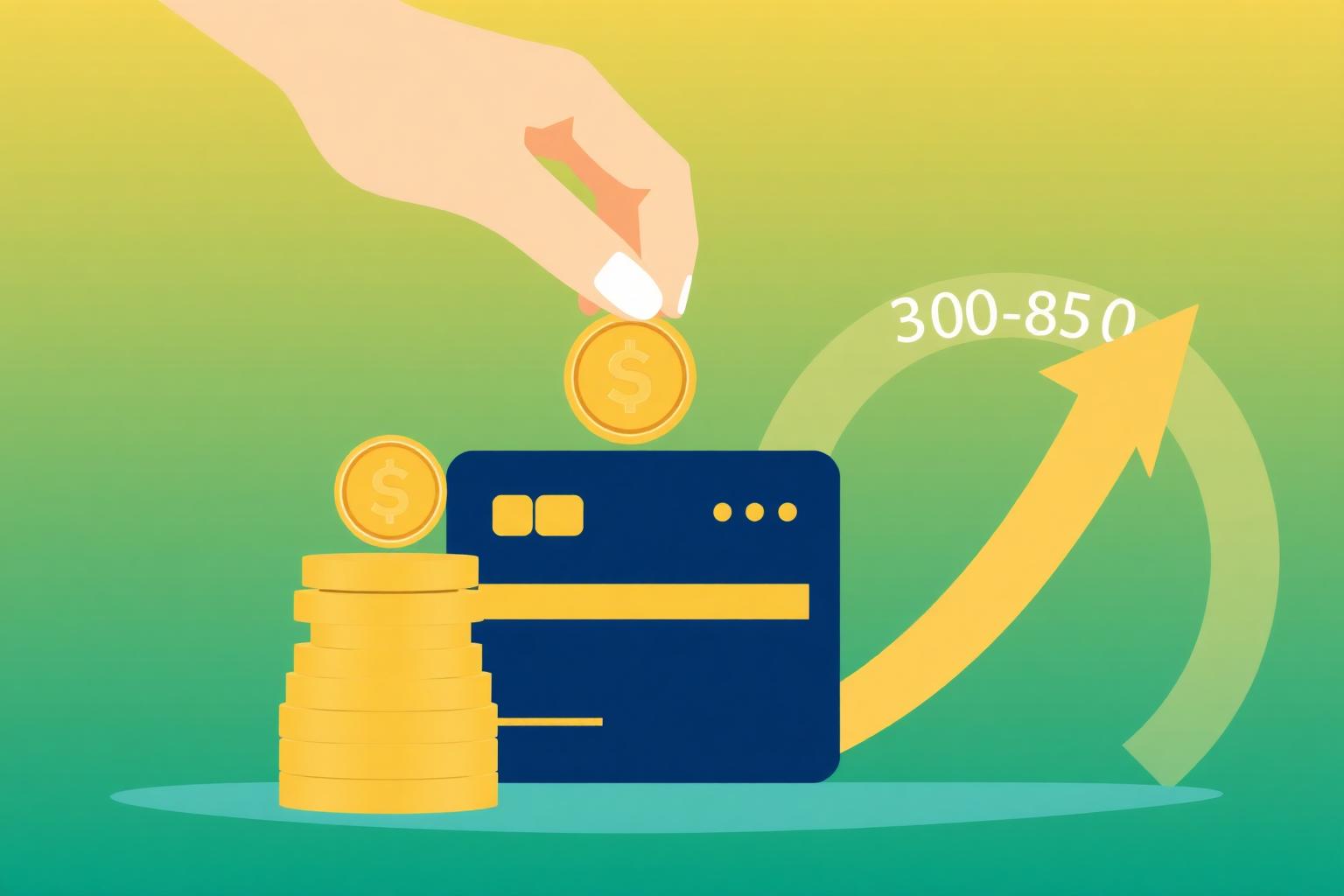
Building credit means establishing a file at Equifax, Experian, and TransUnion, then feeding that file enough positive activity for a scoring model — FICO or VantageScore — to output a 300–850 number. Per the CFPB, you need at least one open tradeline reporting in the last 6 months for FICO scoring, or 30 days of history for VantageScore 4.0.
Step 1 — Open your first reportable tradeline
You need at least one account that reports to all three bureaus. The four fastest entry points:
- Secured credit card — refundable $200–$500 deposit becomes your limit. Reports to all 3 bureaus within 30–45 days.
- Credit-builder loan — a small loan held in a locked savings account; each monthly payment reports as on-time installment history.
- Authorized user on a seasoned card from a trusted family member — the account's full history can post to your file in 30–45 days.
- Credit-union starter card — many credit unions accept ITIN holders and report standard tradeline data.
Step 2 — Keep credit utilization under 10%
Utilization — your reported balance divided by your limit — drives ~30% of your FICO score. The balance captured on your statement closing date is what's scored, not the daily average. Pay your balance before the statement closes to report under 10%. On a $500 secured card, that means keeping the reported balance under $50.
| Utilization band | FICO impact | Action |
|---|---|---|
| 0% | Slight penalty (no activity) | Charge a small purchase monthly |
| 1–9% | Optimal | Target band |
| 10–29% | Mild ding | Pay down before statement |
| 30–49% | 20–40 point drop | Pay urgently or request a limit increase |
| 50%+ | 40–80+ point drop | High-priority paydown |
Step 3 — Never miss a payment
Payment history is ~35% of your FICO score — the single biggest factor. A first 30-day late can drop a 760 score by 80–110 points and stays on file for 7 years. Set autopay for at least the minimum on every account; pay extra manually to bring utilization down.
Step 4 — Add a second account at month 6
Credit mix (10% of FICO) rewards having both revolving (credit cards) and installment (loans) accounts. If you started with a secured card, add a credit-builder loan at month 6. If you started with a loan, add a secured or starter card. Avoid more than 2 new accounts in any 12-month window.
Track your new tradelines across all 3 bureaus
$1 for 15 days — then choose monthly, quarterly, or yearly. Cancel anytime.
- 3-Bureau credit reports & scores
- Daily monitoring & alerts
- Identity theft protection
- Score simulator & insights
- $1 for 15 days trial
- Cancel online anytime
- 3-Bureau credit reports & scores
- Daily monitoring & alerts
- Identity theft protection
- Score simulator & insights
- $1 for 15 days trial
- Cancel online anytime
- 3-Bureau credit reports & scores
- Daily monitoring & alerts
- Identity theft protection
- Score simulator & insights
- $1 for 15 days trial
- Cancel online anytime
Step 5 — Monitor monthly
With MyITINCredit you can pull all three bureaus and confirm new accounts post correctly under your ITIN or SSN. Errors at the bureau level — duplicate accounts, wrong balances, mis-keyed late marks — are common in new files and easy to dispute in the first 90 days under the Fair Credit Reporting Act.
We wrote an SSN-specific version of this guide with the key nuances and differences.
Read guide12-month build-credit timeline
| Month | Action | Typical VantageScore 4.0 |
|---|---|---|
| 0 | Open secured card, set autopay | No score yet |
| 1 | First report posts | 620–660 |
| 3 | 3 on-time payments | 660–690 |
| 6 | Add credit-builder loan; FICO opens | 680–720 |
| 12 | 12 perfect months on 2 tradelines | 700–740+ |
Related credit-building guides
- How to improve your credit score →
- Build credit with an ITIN →
- Credit card utilization explained →
- How credit scores work →
Tools to accelerate your credit-building plan
Personal Loan Offers
See loan options from trusted partners based on your credit profile.
Credit Builder Cards
Designed to help establish or improve your credit history.
Credit Card Offers
Explore cards that match your credit standing and goals.
Get an ITIN Number
Learn how to apply for or renew your ITIN today.
Bank Account Options
Access checking and savings accounts from reputable institutions.
Simply Approved Mortgages
ITIN-friendly home financing from Simply Approved Mortgages, a Simply Approved Corporation brand.
How to build credit — frequently asked questions
Start your credit monitoring today
$1 for 15 days — cancel anytime.